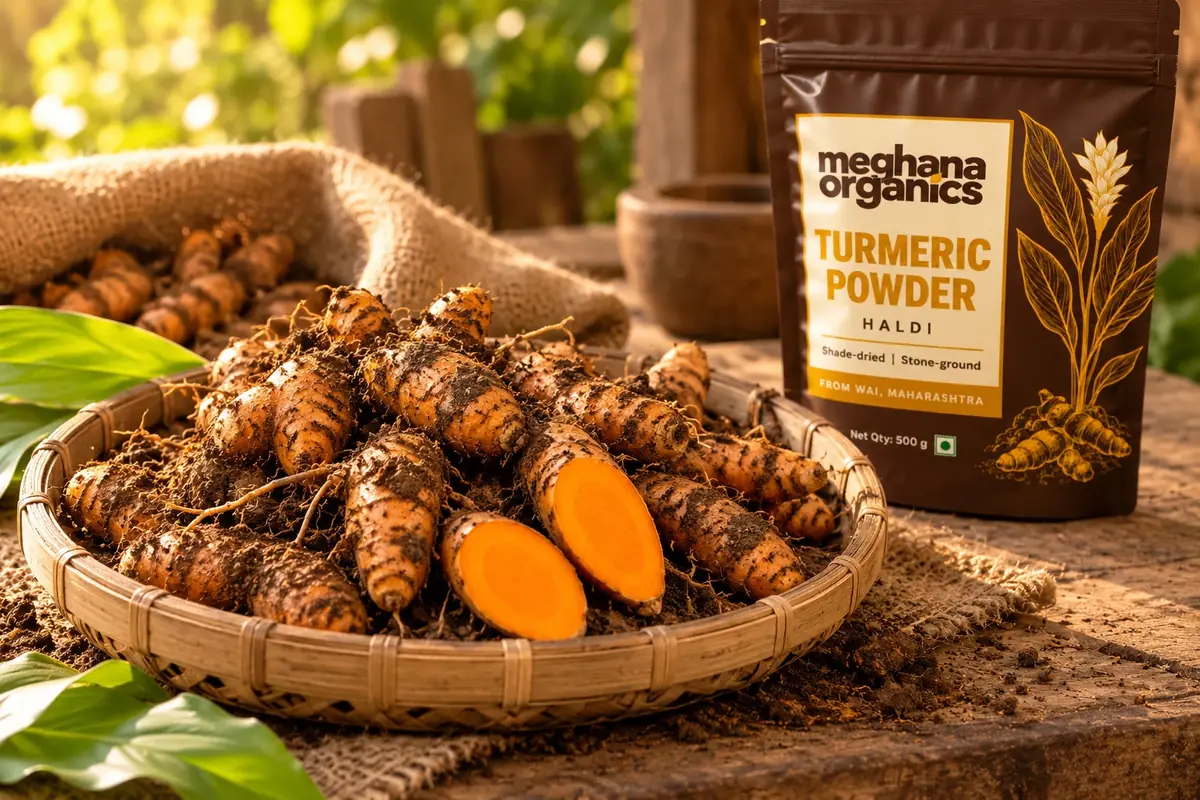
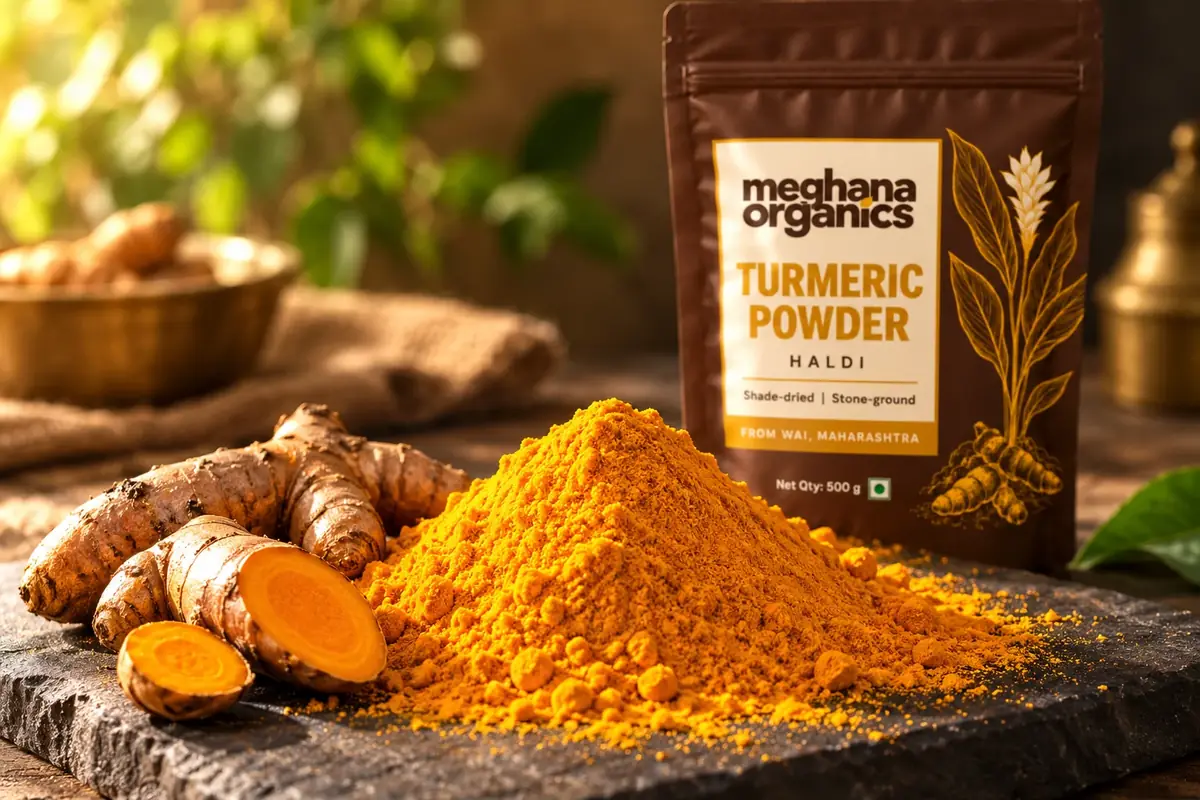
Kachi haldi is fresh turmeric root, and haldi powder is the same root boiled, dried and ground. Fresh haldi is juicy, bright and earthy, and it is a winter ingredient; the powder is deeper in colour, keeps for months and is easier to measure. To swap one for the other, use about 1 tablespoon of grated fresh haldi for every 1 teaspoon of powder, and adjust to taste.
Kachi haldi and haldi powder at a glance
| Compared | Kachi haldi (fresh) | Haldi powder |
|---|---|---|
| What it is | The fresh root, as it comes out of the ground | The root boiled, dried and ground |
| Flavour | Earthy and slightly spicy, with a mild bitter edge if you use too much | Warm and earthy, and more concentrated because the water is gone |
| Colour | Bright yellow-orange flesh | Deep golden-yellow powder |
| Water | Mostly water | Dry |
| Season | Late winter: the crop is generally harvested from January to March | All year |
| Keeps | About 2 weeks in the fridge, up to 6 months in the freezer | Many months. Ground spices in general keep best for one to three years in a cool, dark, airtight jar |
| Measured by | Grated spoonfuls, or a piece of root | Pinches and teaspoons |
| Best for | Pickles, kachi haldi ki sabzi, a little grated into dal (lentils) or rice | Everyday tadka (hot-oil seasoning), milk, marinades, ubtan |
Flavour, colour and moisture
Fresh haldi tastes earthy and slightly spicy, with a mild bitter edge if you use too much, and its flesh is bright yellow-orange. Powder starts as the same root but goes through boiling, drying and grinding. ICAR-Indian Institute of Spices Research notes that boiling avoids the raw odour of fresh turmeric, which is one reason the two smell and taste different.
Powder is also more concentrated, because the water is gone. The institute says dried turmeric usually works out to 15 to 20 per cent of the fresh weight, so 1 kg of fresh roots gives roughly 150 to 200 g of dried haldi. That is why a swap needs more fresh haldi than powder.
Season: when kachi haldi is around
Turmeric takes seven to nine months to mature. In India it is generally harvested from January to March, though early varieties are ready sooner. That makes kachi haldi a late-winter ingredient. Outside those months fresh roots can be hard to find, while powder is always on the shelf.
When the roots reach the market, Rajasthani kitchens make kachi haldi ki sabzi, a curry of fresh haldi with yogurt and ghee (clarified butter), and many homes make kachi haldi ka achar, a fresh turmeric pickle.
How to store fresh haldi
- Choose well. Pick firm roots with no soft spots, mould or shrivelled patches. Brush off loose soil and let them dry completely.
- Fridge. Wrap the roots in a paper towel and keep them in an airtight container or bag. US extension advice is that fresh turmeric root keeps good quality for a couple of weeks in a sealed container.
- Freezer. Freeze slices or chunks in freezer bags or tempered glass jars and use them within six months.
- Not in oil. Do not keep chopped fresh haldi covered in oil on the counter. The same extension advice for fresh turmeric stored in oil is to refrigerate it and use it within four days. A pickle made to a tested recipe, with salt and lemon juice, is a different thing.
- Stains. Wear gloves to peel and chop, and use a dark chopping board. Our guide to cooking with haldi has tips for getting stains off hands, spoons and counters.
How to store haldi powder
Keep powder in a cool, dark, airtight jar away from the stove, and spoon it out with a dry spoon. Ground spices mostly fade rather than spoil, unless damp gets in. US extension food-storage guides put them at roughly one to three years for best quality, and NDSU Extension advises checking the aroma and replacing the spice if it has faded. For our powder, check the best-before date on your pack. Our storage guide has more.
How to swap one for the other
A commonly cited rule is 1 tablespoon of grated fresh haldi for 1 teaspoon of powder. Nyonya Cooking puts it the other way round: when a recipe calls for fresh turmeric and you are using powder, use one third of the amount. Either way it is approximate, because roots vary in age and juiciness. Start with a little less fresh haldi than the rule gives, taste as you cook and adjust.
| The recipe asks for | Use |
|---|---|
| 1 teaspoon haldi powder | 1 tablespoon grated kachi haldi |
| ½ teaspoon haldi powder | 1½ teaspoons grated kachi haldi |
| ¼ teaspoon haldi powder | ¾ teaspoon grated kachi haldi |
| 1 tablespoon grated kachi haldi | 1 teaspoon haldi powder |
| 2 tablespoons grated kachi haldi | 2 teaspoons haldi powder |
Grate fresh haldi finely, because the root is fibrous, and cook it for a few minutes so the raw edge softens.
When each one works best
Kachi haldi
- Pickles. Kachi haldi ka achar is a pickle of fresh haldi with green chilli, lemon juice and oil, made while the roots are in season. One recipe keeps it for 2 to 3 weeks in an airtight glass jar in the fridge and says to use a clean, dry spoon each time.
- Sabzi. Kachi haldi ki sabzi is the Rajasthani winter curry made with yogurt and ghee, often with peas.
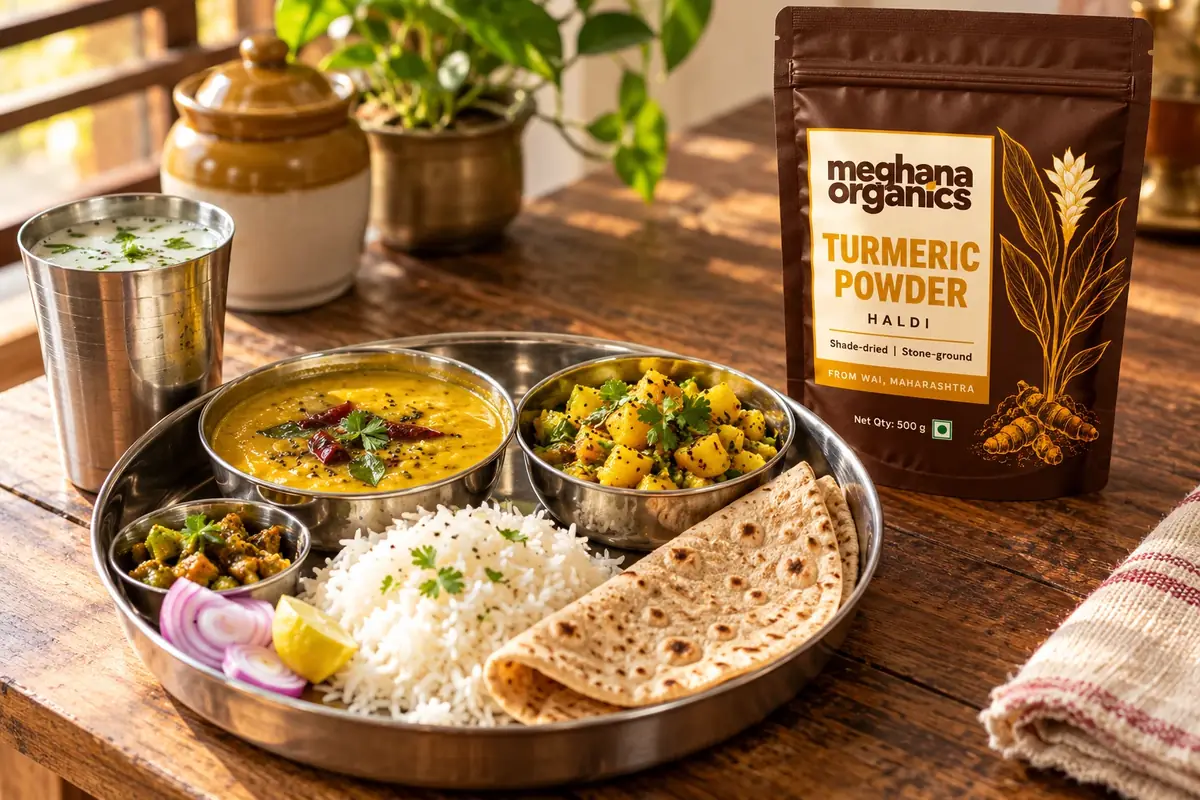
- Dal and rice. Grate a little into the pot, as you would ginger, for a fresher, earthier note.
Haldi powder
- Everyday tadka. A pinch or a quarter teaspoon goes into hot oil in seconds, with no peeling or grating.
- Milk. Powder whisks into warm milk easily.
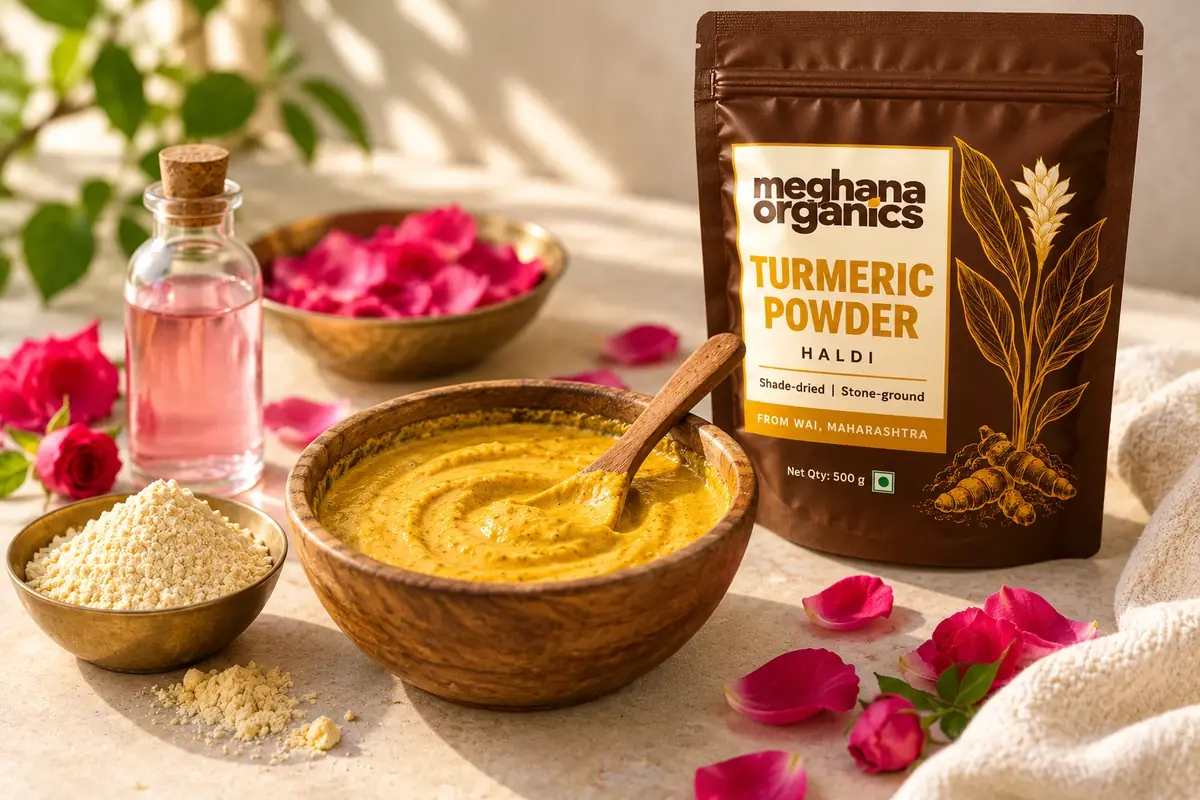
- Ubtan. It mixes straight into besan (gram flour) for ubtan, the traditional paste used on the skin.
- Marinades and spice mixes. Powder gives an even colour from the first spoonful.
Which one to keep at home
Keep powder in the kitchen all year, and buy kachi haldi in winter when you want a pickle or sabzi. We sell only the powder: our Turmeric Powder (Haldi) from our family farm in Wai, Maharashtra is shade-dried and stone-ground, with no added colour, fillers or preservatives. For fresh roots, your local sabzi market in winter is the place to look. If the names are confusing, our guide to haldi, halad and kachi haldi sorts out what each one means, including look-alike plants such as amba haldi.
Sources
- ICAR-Indian Institute of Spices Research, Turmeric extension pamphlet (March 2022)
- Ask Extension (US Cooperative Extension), storing fresh turmeric root (2026)
- NDSU Extension, Food Storage Guide (FN579, 2025)
- Nyonya Cooking, Fresh turmeric: taste, storage and substituting
- Ministry of Curry, Fresh turmeric pickle
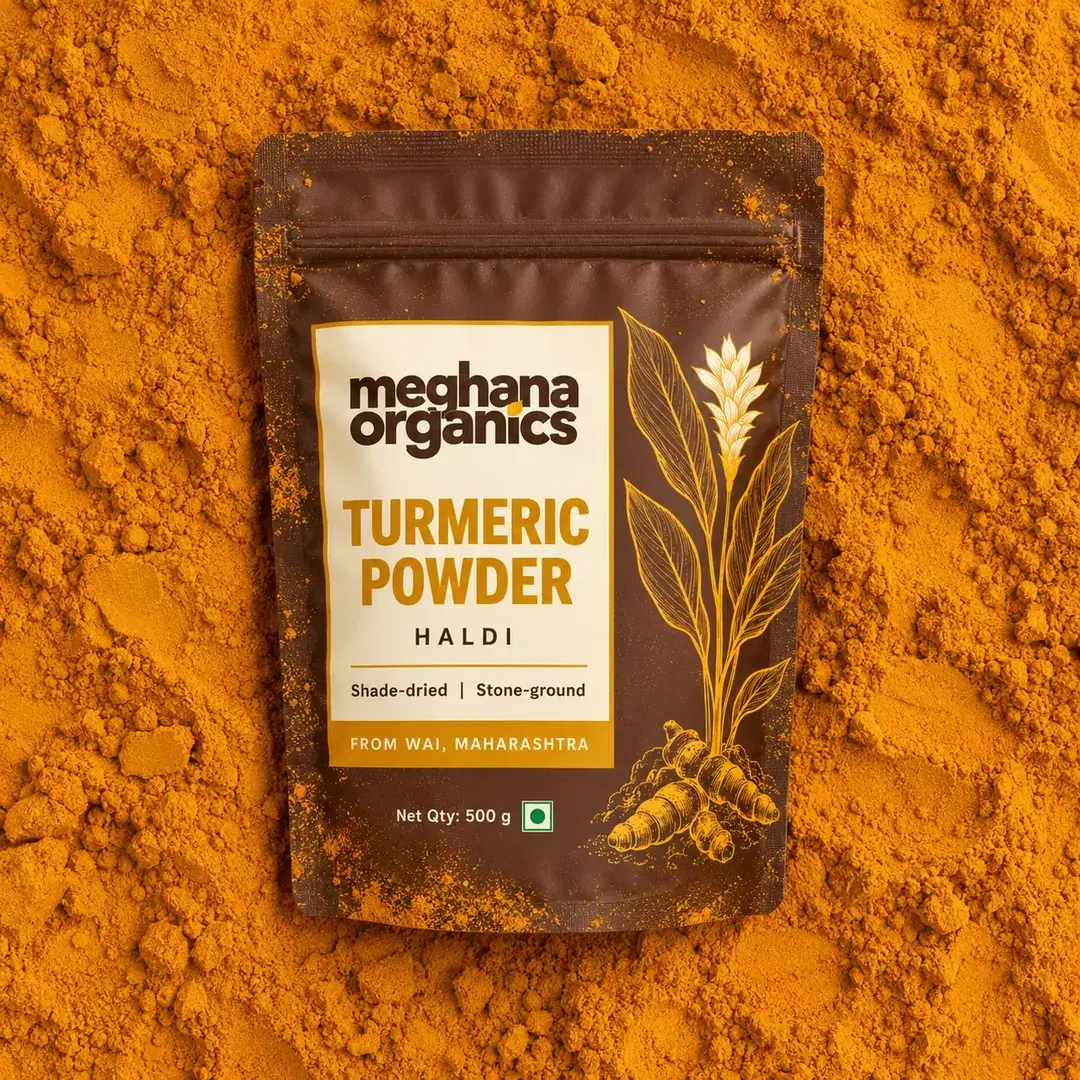
Turmeric Powder (Haldi)
From our family farm in Wai, Maharashtra. Shade-dried and stone-ground, with nothing added. 250g ₹299, 500g ₹549, 1kg ₹999.
Written by Meghana Organics Team
We are the family behind Meghana Organics. Our haldi grows on our farm in Wai, Maharashtra, and we cook with it every day. Here we write about how it is made, how to choose and store it, and how we use it.