Add haldi early so it cooks: stir it into hot oil or ghee (clarified butter) for 10 to 20 seconds, or put it in the pot with the dal (lentils) and water. A quarter teaspoon is enough for 1 cup of raw dal, which serves four, and a quarter to half a teaspoon suits a sabzi (a cooked vegetable dish) for three or four. Haldi that never meets heat tastes raw and slightly bitter, so keep late additions to a pinch.
The amounts below are starting points. Recipes differ, and haldi is easy to add but impossible to take out, so begin at the low end and add more next time.
How much haldi to add
| Dish | Haldi to start with | When it goes in |
|---|---|---|
| Dal, 1 cup raw dal (serves 4) | ¼ teaspoon, up to ½ teaspoon for a deeper colour | In the pot with the dal and water |
| Sabzi, about 500 g vegetables | ¼ to ½ teaspoon | In the tadka, after the whole spices and just before the vegetables |
| Rice, khichdi (rice cooked with lentils) or pulao (spiced rice), 1 cup raw rice | ¼ to ½ teaspoon | In the ghee with the whole spices, or in the cooking water |
| Poha (flattened rice) or upma (savoury semolina), for 2 to 3 people | ¼ to ½ teaspoon | In the phodni, along with the onion |
| Marinade, 500 g paneer (fresh cheese), chicken or vegetables | ½ teaspoon | Mixed into curd or oil with salt, chilli and lemon juice |
| Pickle, 500 g lime or raw mango pieces | About 1 teaspoon | Mixed in with the salt and spice masala |
| Milk, 1 cup | ¼ to ½ teaspoon | Whisked into warm milk, then simmered |
| Eggs, 3 eggs | A pinch to ¼ teaspoon | In the pan with the onion, before the eggs go in |
| Soup, a pot for four | ¼ to ½ teaspoon | With the onion or ghee at the start |
| Roasted vegetables, about 500 g on a tray | ½ teaspoon | Tossed with oil, salt and pepper before roasting |
Bloom it in hot oil or ghee without burning it
Curcumin, the pigment that makes haldi yellow, dissolves poorly in water and well in fat, which is one reason Indian recipes start with oil or ghee. A University of Guam Extension bulletin explains the food science: fat-rich foods help keep curcumin stable, and curcumin starts to break down above about 120°C. That is one more reason to keep the bloom short.
In a tadka (the hot-oil seasoning, called phodni in Marathi), haldi goes in last among the dry spices:
- Heat the oil or ghee on medium until a cumin or mustard seed sizzles the moment it lands.
- Add the whole spices first: mustard seeds, then cumin, then curry leaves or hing (asafoetida).
- If the oil is smoking, take the pan off the heat for a few seconds, then add the haldi.
- Stir for 10 to 20 seconds, then add the onion, vegetables or water straight away. The moisture cools the pan and stops the haldi catching.
Ground spices scorch fast. One cooking reference gives ground turmeric about 30 seconds in hot fat, long enough to lose its raw taste, and warns that the line between bloomed and burned is a matter of seconds. If the haldi turns dark brown or smells acrid, start the tadka again. Burnt haldi makes the whole dish bitter.
When to add it: start or end
Early, almost always. Haldi needs a few minutes of heat to lose its raw edge, so it goes in at the start and cooks with the dish.
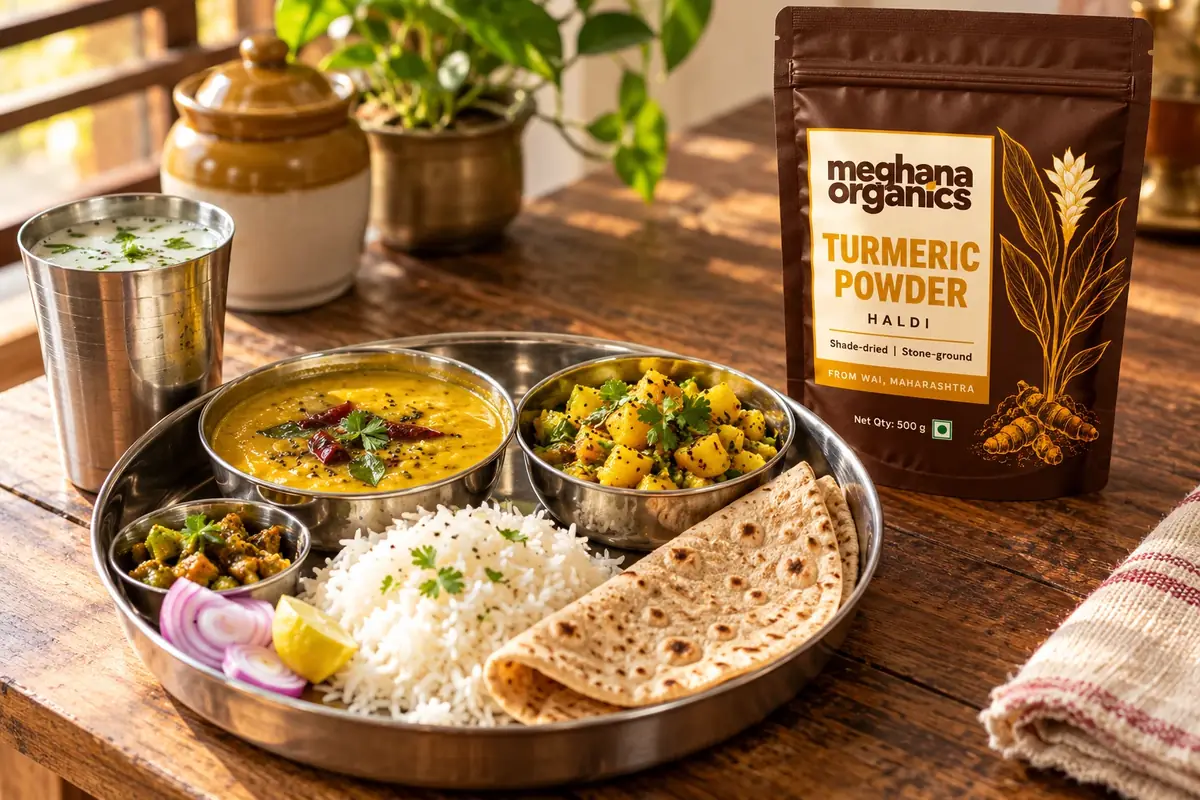
- Dal: in the pot with the dal and water. Sanjeev Kapoor's varan, a Maharashtrian dal, pressure-cooks 1 cup of toor dal (split pigeon peas) with ¼ teaspoon of haldi, hing and 3 cups of water and serves four. Many cooks then finish the dal with a tadka of whole spices in ghee, poured on at the end.
- Sabzi, poha, upma and rice: in the first tadka, so the haldi cooks along with the vegetables or grain.
- Milk and soup: early, then simmer gently.
- At the end: a pinch at most, for example stirred into chaas (buttermilk), because uncooked haldi tastes raw.
Haldi in dal, sabzi and chaas is a traditional part of everyday meals, and in Ayurveda haldi (haridra) is traditionally used to support digestive balance. See our digestive balance collection for more.
Pair it with fat and black pepper
Indian kitchens have long cooked haldi with ghee or oil and a pinch of freshly cracked black pepper. Fat carries curcumin, and black pepper contains piperine, which research links with better absorption of curcumin.
Be clear about what that research is. Most of it uses concentrated curcumin at doses far above cooking amounts, so a spoon of haldi in dal is not the same thing. Think of the pairing as a good way to cook, not a dose. Our guide to why black pepper is turmeric's best friend goes through the study and its limits.
Milk, eggs, soups, marinades, pickles and roasted vegetables
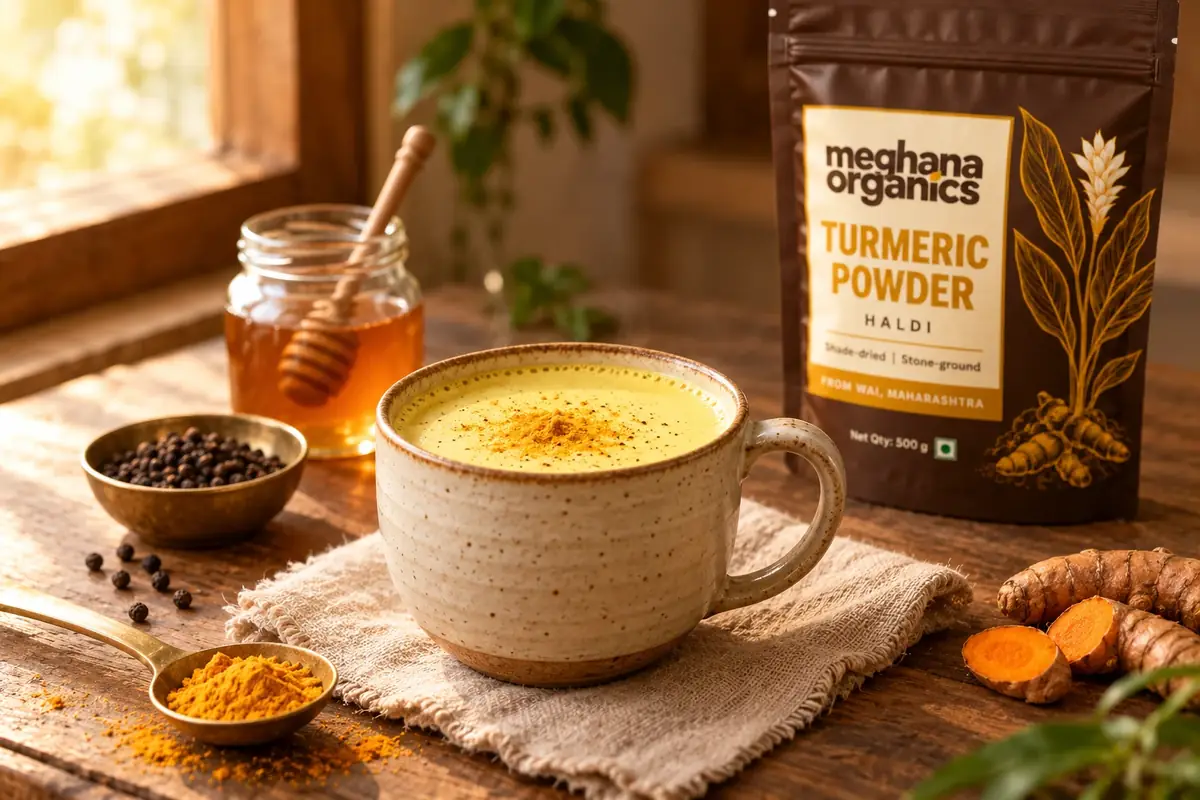
- Milk (haldi doodh): warm the milk, whisk in the haldi until smooth, add a pinch of black pepper and a little ghee, and simmer for 3 to 5 minutes without letting it boil. The full method is in our haldi doodh recipe.
- Eggs: for bhurji (spiced scrambled eggs), stir the haldi into the onion and tomato masala and cook for about a minute before the eggs go in. A pinch is enough for an omelette.
- Soups: soften the onion in ghee, add the haldi, then the vegetables or lentils and water.
- Marinades: stir the haldi into curd or oil with salt, chilli and lemon juice. The fat spreads the colour evenly.
- Roasted vegetables: toss cauliflower, potato or carrot with oil first, then the haldi, salt and pepper, so the haldi clings evenly.
- Pickles: haldi goes in with the salt and chilli. The University of Guam bulletin notes that curcumin is more stable in acidic foods, which suits lime and raw mango.
Getting haldi stains off hands, spoons and counters
Haldi stains fast, and wiping with water alone only spreads it. Act quickly and match the fix to the surface.
- Hands: wash with hot soapy water, rub with lemon juice and scrub gently with a soft brush. Skip the lemon on cuts. Wear gloves when you peel kachi haldi (fresh turmeric root).
- Wooden spoons and boards: scrub with a paste of baking soda and a little dish soap, rinse, and dry straight away so the wood does not swell. A few hours in sunlight fades what is left.
- Plastic containers: soak overnight in 2 parts water to 1 part white vinegar with a few drops of dish soap, then dry in the sun.
- Counters: mop up fresh spills first, then leave a paste of baking soda and water on the stain for 15 minutes and scrub with a damp cloth. On granite or marble, skip the lemon and vinegar, because acid can damage some natural stone.
- Clothes: use cool water, never hot, which sets the stain, and dry the garment in sunlight.
Cooking with our haldi
These amounts work for any good haldi. If you cook with ours, Turmeric Powder (Haldi) from our family farm in Wai, Maharashtra is shade-dried and stone-ground, with no added colour, fillers or preservatives. Spoon it out with a dry spoon, away from the steam of the pan. If a recipe calls for fresh haldi instead, our guide to kachi haldi vs haldi powder shows how to swap.
Haldi in your cooking is food, not medicine. If you are pregnant or nursing, on regular medication or living with a health condition, ask your doctor before going beyond everyday cooking amounts.
Sources
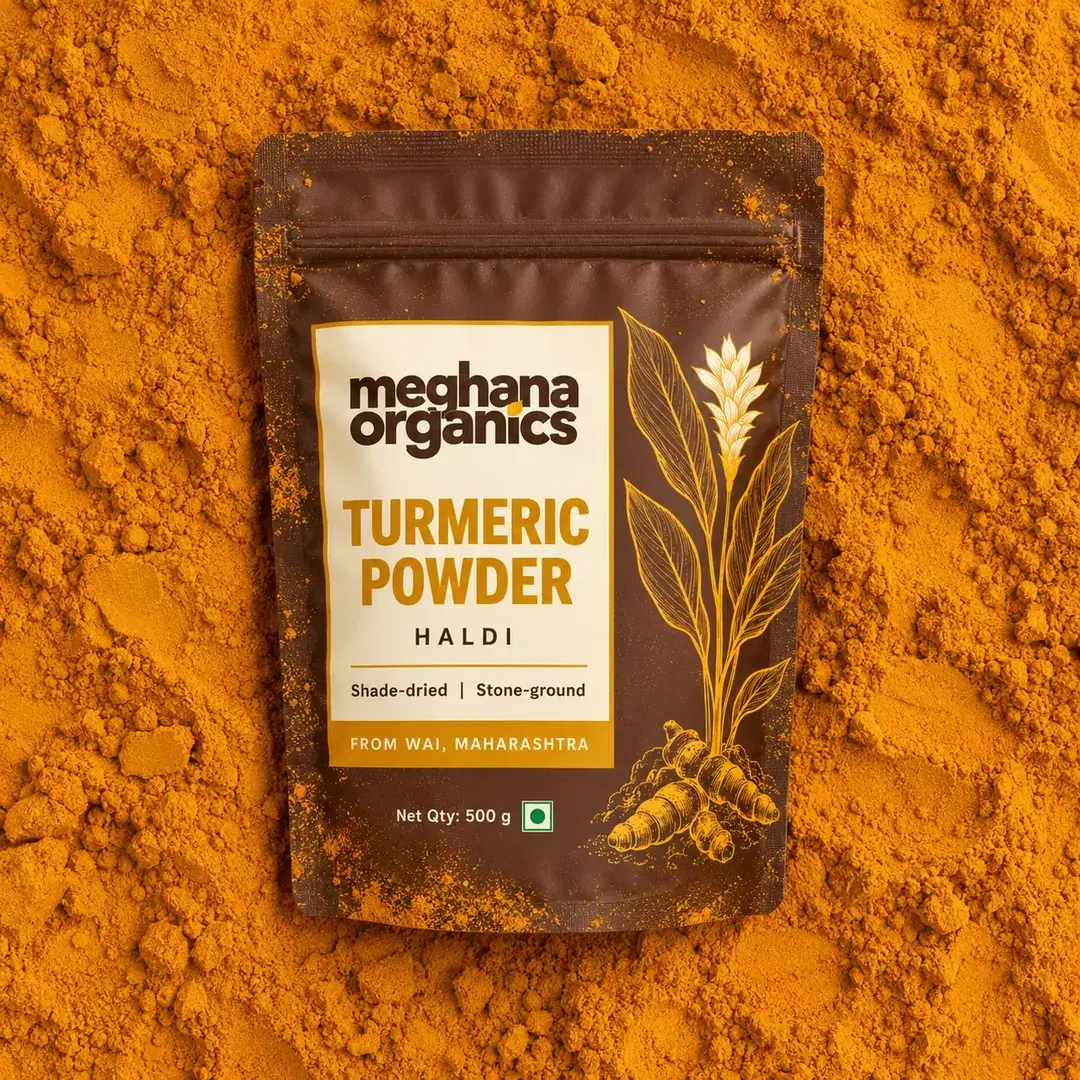
Turmeric Powder (Haldi)
From our family farm in Wai, Maharashtra. Shade-dried and stone-ground, with nothing added. 250g ₹299, 500g ₹549, 1kg ₹999.
Written by Meghana Organics Team
We are the family behind Meghana Organics. Our haldi grows on our farm in Wai, Maharashtra, and we cook with it every day. Here we write about how it is made, how to choose and store it, and how we use it.