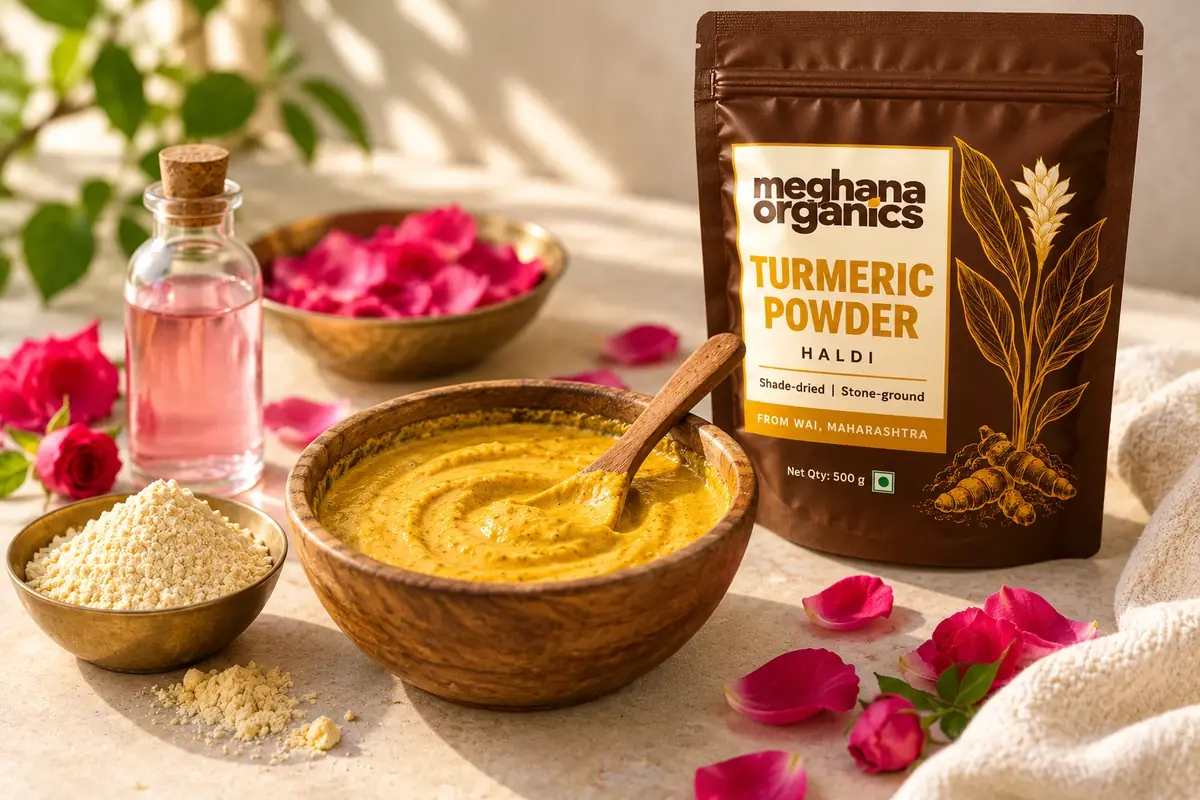
The haldi ceremony is a pre-wedding ritual in which family members apply a yellow turmeric paste to the bride and groom. Turmeric stands for auspiciousness and protection, and families also say it gives the couple a glow before the wedding. Haldi-kunku, written halad-kunku in Marathi, is a different custom: married women invite one another, apply turmeric and kunku (red vermilion powder) and give small gifts called vaan.
What happens at a haldi ceremony
The details change from family to family. The ceremony is usually held at the bride's and the groom's own homes, on the morning of the wedding or the day before. Relatives apply the paste to the face, neck, hands and feet, sometimes with songs and dancing. A playful custom says that anyone the couple touch with the paste will soon find a partner.
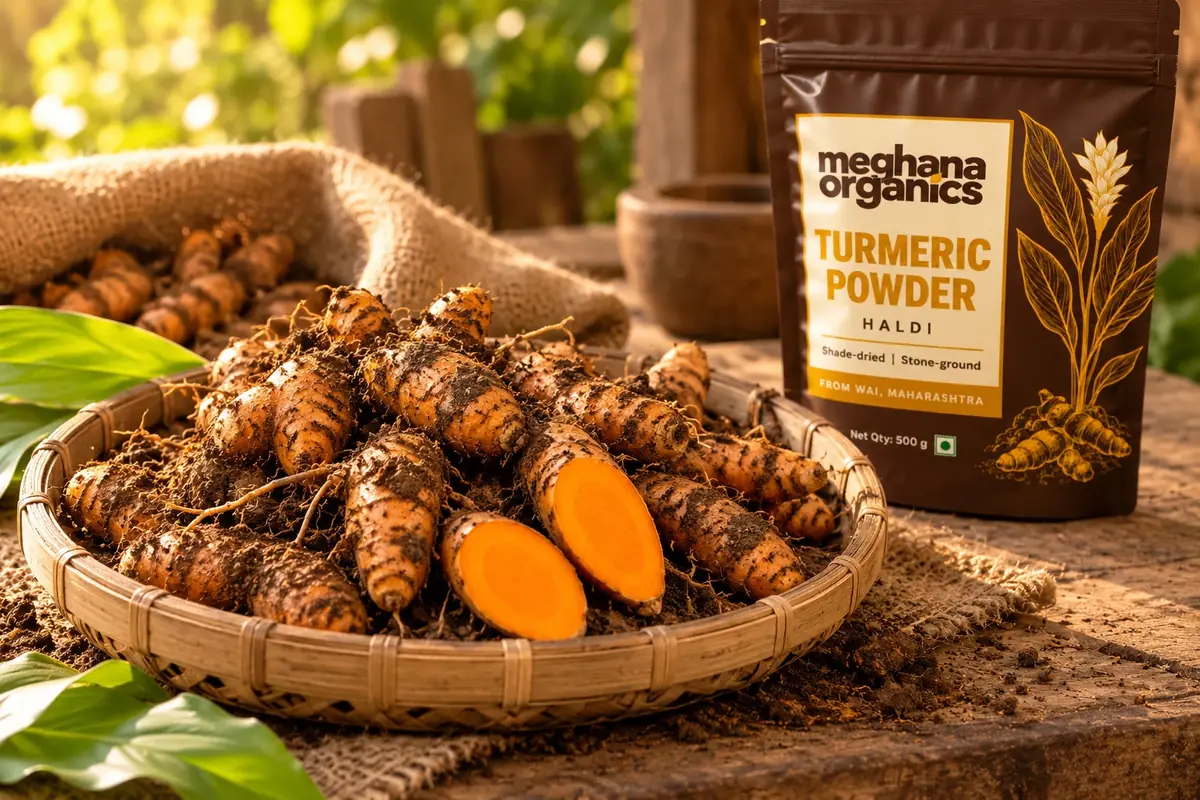
In Maharashtra it is called halad chadavne, roughly "putting on the halad" (halad is Marathi for turmeric). One account describes it on the eve of the wedding. Five married women, known as suhasinis, pound raw turmeric roots into a smooth paste, scoop it up with mango leaves and apply it to the bride's feet, knees, shoulders and head. An identical ceremony is held at the groom's house, and the paste left over from his side is sent to the bride. Afterwards the couple stay at home until the wedding.
Other communities have their own names for it: gaye holud in Bengal, which means "turmeric on the body", mayian or vatna in Punjab, and ubtan, mandha or tel baan elsewhere.
Why turmeric is used
Three reasons come up often when families explain it.
- Colour. Yellow is considered auspicious and is linked with prosperity for the new couple. Some couples wear yellow on the day.
- Protection. Many families believe the paste protects the couple from the evil eye (nazar), and the couple usually stay at home after it until the wedding.
- Glow. Turmeric is said to leave the skin glowing before the wedding. In Ayurveda, haldi (haridra) is traditionally used to support skin glow. The everyday version is ubtan, a paste of haldi, besan (gram flour) and rose water or milk, covered in our guide to the ubtan tradition. If the glow is what draws you to it, see our skin glow support collection.
These are traditional beliefs, not medical claims.
What haldi-kunku is
Haldi-kunku is a social gathering in which married women exchange haldi and kunku (kumkum, the red vermilion powder) as a sign of being married and a wish for their husbands' long lives. It is especially popular in Maharashtra, Karnataka, Telangana, Andhra Pradesh and Goa. In Marathi, turmeric is halad, so you will also see it written halad-kunku or haladi-kunku, and our guide to haldi, halad and kachi haldi explains how the names relate.
The host invites friends, relatives and new acquaintances, applies haldi and kunku to each guest, offers refreshments and gives a small gift. Traditionally the guests are married women, and a newly married woman is expected to host for her first five years of marriage.
Makar Sankranti to Ratha Saptami
The best-known season is Makar Sankranti, usually on 14 or 15 January, when the sun moves into Capricorn. In Maharashtra, haldi-kunku gatherings run from Sankranti until Ratha Saptami, which fell on 4 February in 2025, so each household picks a day in that window. Hosts hand out tilgul (sweets of sesame and jaggery) with the greeting "tilgul ghya, goad goad bola", which means "take this tilgul and speak sweetly".
Chaitra Gauri
The other big season is Chaitra, the first month of the Marathi calendar, which begins with Gudi Padwa. Chaitra Gauri, the month-long worship of the goddess Gauri, runs from the third day of Chaitra to the third day of Vaishakh, roughly March to May, and women hold haldi-kunku gatherings through the month. The refreshments include kairiche panhe, a raw mango drink, and vatli dal, a dal snack. Some households also hold haldi-kunku on Fridays in Shravan and at Diwali.
Vaan: the gift you take home
Each guest leaves with a vaan, a small gift. Zee 24 Taas, a Marathi news channel, describes it as a gift of items that stand for marital well-being, handed over with the tip of the giver's pallu (the end of the sari) supporting it. Typical things are bangles, sweets, small novelties, flowers, betel leaves and nuts, or a coconut. In some homes the guest's ota, the lap formed by the end of her sari, is filled with bor (jujube).
A simple haldi paste to make at home
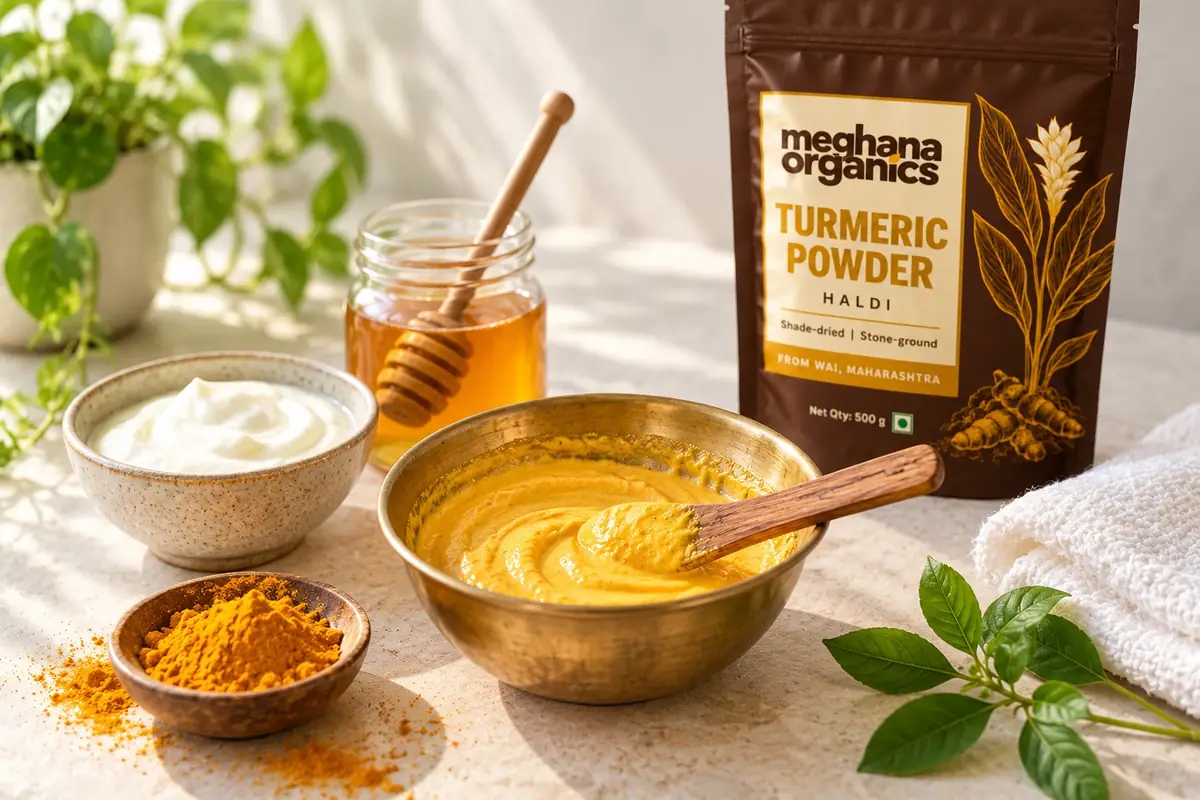
This is a plain paste for the arms, feet and shoulders, and for the face once you have patch-tested. Take it as a starting point: families add their own touches, such as sandalwood powder or milk. In the Maharashtrian account above, the paste is made from raw turmeric roots pounded smooth, and our guide to kachi haldi and haldi powder explains how that differs from powder.
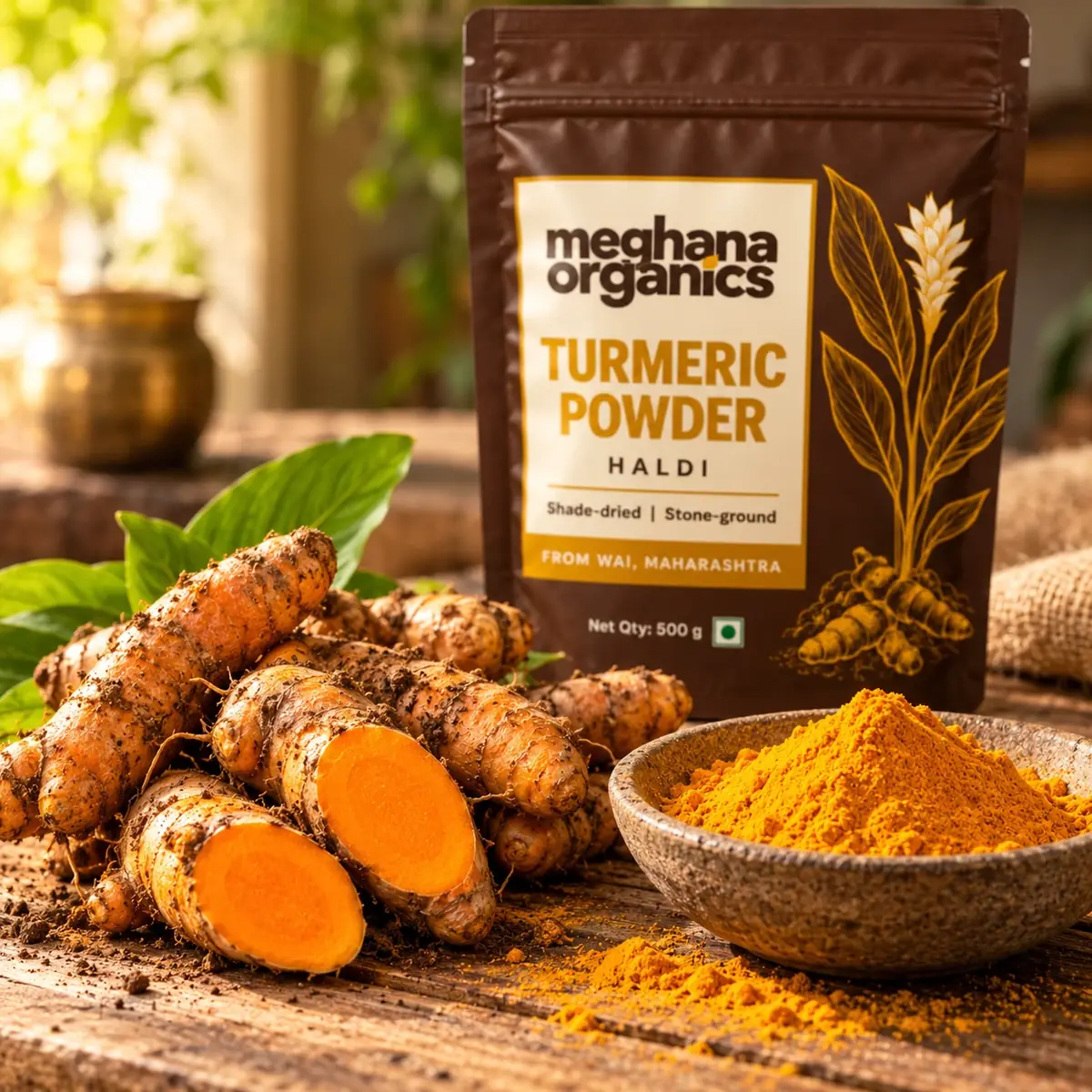
Use a haldi with nothing added. Ours, Turmeric Powder (Haldi), has no added colour, fillers or preservatives.
Ingredients
- 1 tablespoon haldi (turmeric powder)
- 4 tablespoons besan (gram flour)
- 1 tablespoon curd (dahi), or 2 teaspoons oil such as coconut or sesame oil
- 3 to 4 tablespoons rose water, plus a little more if needed
Method
- Mix the haldi and besan in a bowl.
- Stir in the curd or oil.
- Add the rose water a tablespoon at a time, stirring, until you have a thick, spreadable paste, about the texture of thick yoghurt.
- Spread a thin layer on clean, dry skin, away from the eyes and any broken skin.
- Leave it for 15 to 20 minutes, until it starts to dry, then rinse off with lukewarm water.
This makes about half a cup. Multiply the quantities for more people. Use a little less haldi for a paler paste.
Before you use it
- Patch-test a day ahead. Dab a little paste on the inside of your forearm, rinse it off after 20 minutes and watch the spot for 24 hours. If you notice redness, itching or swelling, do not use it.
- Keep it off broken or irritated skin and out of your eyes.
- Expect stains. Turmeric stains cloth and can leave a yellow tint on skin, so wear old clothes and spread an old sheet.
Haldi is a food, and this paste is a tradition, not medical advice. If your skin is very sensitive, or you are unsure, check with a dermatologist first.
Sources
- Ruchira Adhikari Ghosh, "Rustling silks and flamboyant hues at Maharashtrian weddings", Different Truths, 4 May 2018
- Suhasini Reddy, "Significance of applying Pasupu before the Indian wedding for the bride and the groom", The Hans India, 16 January 2019
- Wikipedia: Haldi Kumkum (general background)
- Zee 24 Taas (Zee News Marathi), "Haldi kunku special", 14 January 2025
- Wikipedia: List of Hindu festivals in Maharashtra (general background)
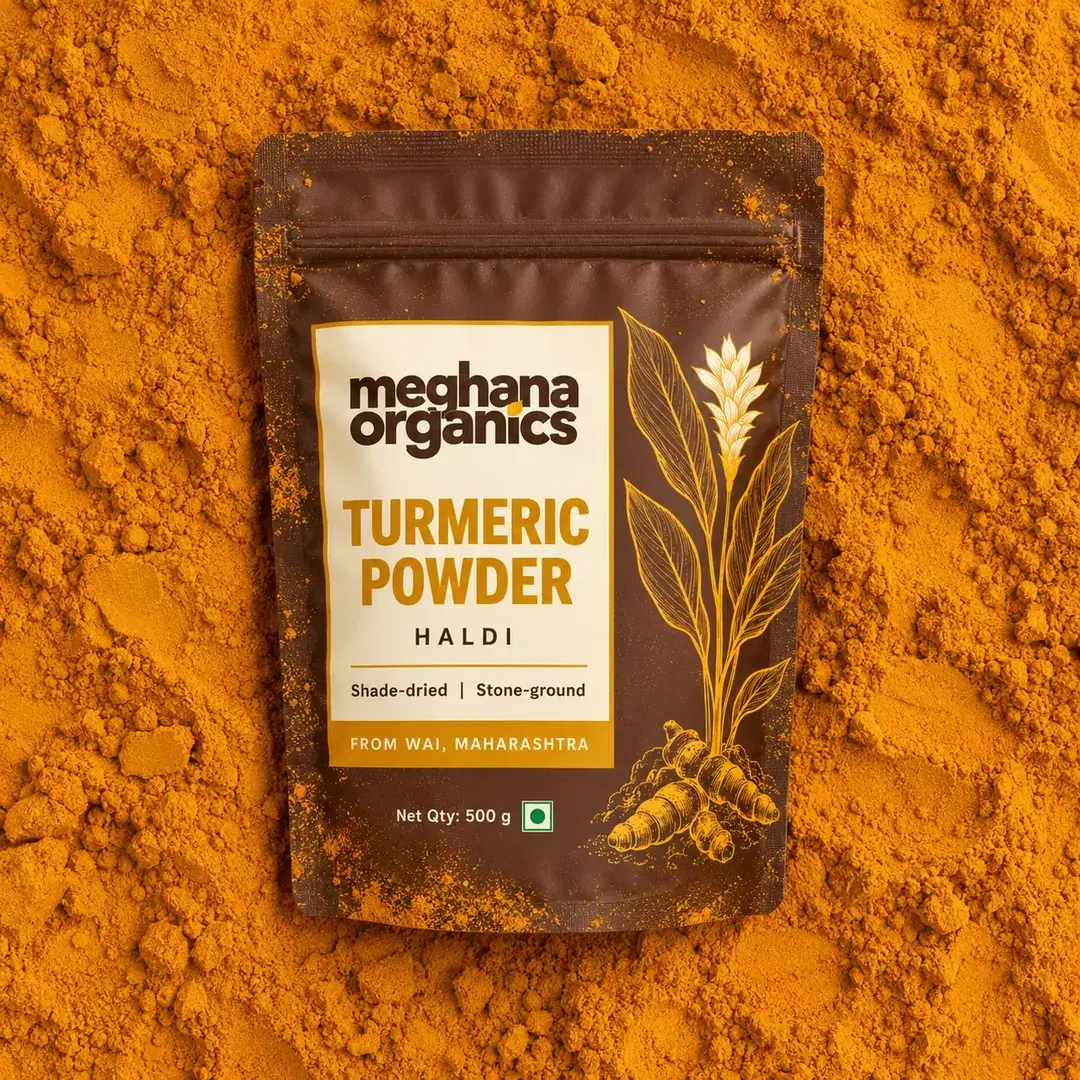
Turmeric Powder (Haldi)
From our family farm in Wai, Maharashtra. Shade-dried and stone-ground, with nothing added. 250g ₹299, 500g ₹549, 1kg ₹999.
Written by Meghana Organics Team
We are the family behind Meghana Organics. Our haldi grows on our farm in Wai, Maharashtra, and we cook with it every day. Here we write about how it is made, how to choose and store it, and how we use it.